Confused about Seamless vs Seemless and not sure which spelling is correct? You’re not alone this is one of the most common spelling mistakes in English.
I’ve been there too, typing quickly and wondering if “seemless” looks right or not. The truth is, only one of these spellings is correct, and the other is simply a common error. Understanding the difference can instantly improve your writing and confidence.
You’re writing emails, articles, or social posts, accuracy really matters. That’s why this guide breaks it down in a simple, friendly way. By the end, you’ll never mix them up again.
Quick Answer:
✅ Seamless is the correct spelling. It means smooth, continuous, or without interruptions.
❌ Seemless is incorrect and does not exist in standard English.
What Does “Seamless” Mean? 🧵
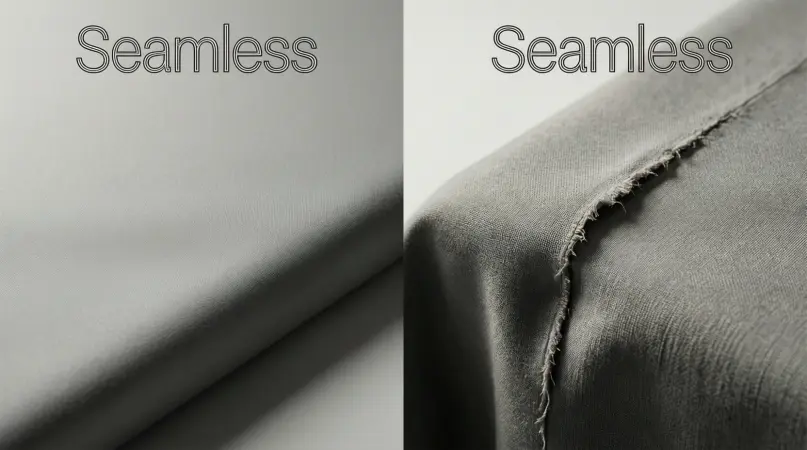
The word “seamless” comes from “seam” (a line where two pieces of fabric are joined) + “-less” (without). Literally, it means “without a seam”, but figuratively, it’s used to describe smooth, uninterrupted processes or transitions.
Examples of “Seamless” in Sentences:
- The transition from high school to college was seamless for her.
- Our new app provides a seamless user experience.
- He stitched the fabric so carefully that it looked seamless.
- Video streaming is seamless, even on slow internet.
Key Uses:
- Smooth processes: “The workflow is seamless and efficient.”
- Continuous experiences: “Enjoy a seamless journey through the museum.”
- Effortless integration: “This software integrates seamlessly with your existing tools.”
Why “Seemless” Is Wrong ❌
Many people type “seemless” because it sounds similar to “seamless”, and “seem” is a real word meaning “appears”. However, there is no such word as “seemless” in English.
Common Mistakes:
- “The transition was seemless.” ❌
- “She made a seemless effort.” ❌
Correct Version:
- “The transition was seamless.” ✅
- “She made a seamless effort.” ✅
Memory Trick / Mnemonic:
Think of a seam in clothing. If there’s no seam, it’s seamless.
💡 “Seamless = without a seam” → easier to remember than “seemless.”
Seamless vs Seemless: Comparison Table 🆚
| Feature | Seamless | Seemless |
| Spelling | ✅ Correct | ❌ Incorrect |
| Meaning | Smooth, continuous, without interruption | Does not exist |
| Usage | Workflow, transition, integration, experience | ❌ Avoid |
| Example | “The app provides a seamless experience.” | “The app provides a seemless experience.” ❌ |
Real Life Examples of “Seamless” 🌎
- Emails & Business Communication:
- “We aim to provide a seamless onboarding experience for new employees.”
- “We aim to provide a seamless onboarding experience for new employees.”
- Social Media Posts:
- “Enjoy a seamless shopping experience with free delivery!”
- “Enjoy a seamless shopping experience with free delivery!”
- News Headlines:
- “The government launched a seamless vaccination campaign.”
- “The government launched a seamless vaccination campaign.”
- Academic Writing:
- “This study demonstrates a seamless integration of theory and practice.”
- “This study demonstrates a seamless integration of theory and practice.”
- Everyday Speech:
- “Her presentation was seamless—I didn’t notice any mistakes!”
- “Her presentation was seamless—I didn’t notice any mistakes!”
Common Mistakes and Tips to Remember ✨
- Do not confuse seamless with seemless.
- Tip 1: Focus on “seam” + “less” → think of fabric or smooth connections.
- Tip 2: If you hear it pronounced as “seem-less,” remember it’s just the wrong spelling.
- Tip 3: Use spell-check tools or Grammarly to catch this common mistake.
Extra Tip: When unsure, ask yourself: “Does it refer to smoothness or appearance?” If smoothness → seamless, if appearance → maybe you meant seems.
British vs American English 🏴🇺🇸
Good news: “Seamless” is spelled the same in both British and American English. There’s no regional difference, so you can use it confidently in any English context.
Examples of Correct Usage Across Different Contexts 📝
| Context | Example Sentence |
| “We strive to make your registration seamless and easy.” | |
| Social Media | “Check out our seamless checkout process! 🛒” |
| Academic | “The experiment shows seamless coordination between systems.” |
| News | “The merger resulted in a seamless integration of two companies.” |
| Everyday Speech | “The handover was seamless; I didn’t even notice it.” |
FAQs: People Also Ask 🤔
1. Is “seemless” a real word?
No, “seemless” is incorrect. The correct word is seamless.
2. How do I remember the difference between seamless and seemless?
Think of “seamless = without a seam”. If it’s smooth, it’s seamless.
3. Can I use seamless in professional emails?
Absolutely! It’s commonly used in business communication, e.g., “seamless integration” or “seamless onboarding.”
4. Is seamless spelled the same in British and American English?
Yes, seamless is spelled the same in both.
5. Can I say “seamless transition” in everyday conversation?
Yes! It’s a very common phrase for smooth changes or processes.
6. Are there synonyms for seamless?
Yes! Some include smooth, flawless, uninterrupted, perfect, and continuous.
7. Why do people write seemless?
Because it sounds similar to “seamless,” but it’s a spelling error. Always double-check!
Conclusion ✨
In short:
- Seamless ✅ = smooth, continuous, without interruption
- Seemless ❌ = incorrect, avoid it
Always remember the seam mnemonic: “No seam = seamless.” You’re writing emails, social media posts, or academic papers, using seamless correctly will make your English look professional and polished.